Latest News from Redvision CCTV
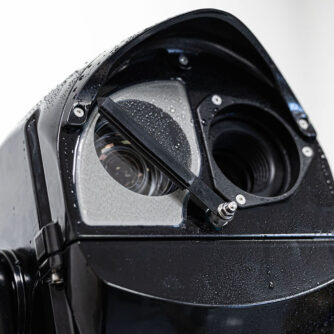
Redvision launches X4 Commander Bi-spectral for critical infrastructure surveillance
Redvision CCTV announces the launch of the X4 Commander Bi-spectral. This camera combines thermal and optical imagery in a single rugged PTZ, essential for critical infrastructure sectors including border control, utilities, airports, and ports as well as marine applications. The thermal side can detect heat signatures multiple kilometres away and offers lens options from 9-50mm. This range provides flexibility to suit different operational needs from wide area monitoring to long-range target detection. The 12μm pixel pitch and ≤20mK thermal sensitivity ensure accurate heat detection through darkness, fog, smoke, and camouflage. The optical side will identify targets up to five hundred meters away in complete darkness, with a 40x optical zoom, built in IR and white light. Together this provides operators... Read More
How to improve town centre security by fixing the most common CCTV coverage gaps
Blind spots in a town centre security network tend to cluster in the same locations and follow the same patterns. You might think the culprit is a lack of cameras. In reality, it’s cameras in the wrong places and footage that doesn’t support the decisions operators need to make. Many councils are also working with budgets that don’t stretch to full network replacement in a single cycle. But closing coverage gaps doesn’t have to mean starting from scratch. This guide covers the most common town centre CCTV gaps, what acceptable coverage looks like in practice and the questions worth putting to your installer or manufacturer before you sign off on the upgrade. Where coverage gaps tend to appear in town... Read More
A practical step-by-step specification checklist for public sector CCTV installers
Most specification failures on public sector CCTV projects are the result of questions that were never asked at the quoting stage. By the time a compliance gap or an underspecified retention period comes to light, the system is already installed. The conversation that follows is harder than the one that should have happened before the quote went in. This checklist is designed to make sure that conversation happens at the right point in the process to help you build a solid specification before you quote. Step 1: understand the site before you design anything Sites winning public sector CCTV contracts typically combine several different surveillance challenges in one: Wide open spaces where early detection is the priority. Choke points, such... Read More
CCTV for schools: where cameras genuinely improve safeguarding (and where they don't)
If you're responsible for safety at a school, college or university, you've probably had the conversation more than once. Someone raises a concern, an incident happens, or a governor asks whether the site is adequately covered, and suddenly, CCTV is on the agenda. The challenge is that cameras are often added reactively. A new camera here, a repositioned unit there, without a clear view of what the system is actually supposed to achieve. The result is a patchwork of coverage that's hard to manage, difficult to justify to staff and parents, and not always aligned with the safeguarding outcomes that matter most. This guide is designed to help you think more clearly about where CCTV for schools genuinely delivers and... Read More
Zone-by-zone campus CCTV planning for universities and colleges
Universities and colleges present a complex surveillance challenge. A campus is not a single site; it is dozens of distinct environments layered on top of each other. Student accommodation, lecture theatres, car parks, open footpaths, bike storage, sports facilities and administrative buildings all share the same footprint, but each carries its own risk profile and its own technical demands. If you’re designing or specifying campus CCTV for a higher or further education site, a generic coverage approach will quickly create gaps. Camera placement needs to follow the risk, not the budget line. This guide breaks the campus down zone by zone, covering the camera types best suited to each area, and explains how to combine fixed and pan-tilt-zoom (PTZ) units... Read More